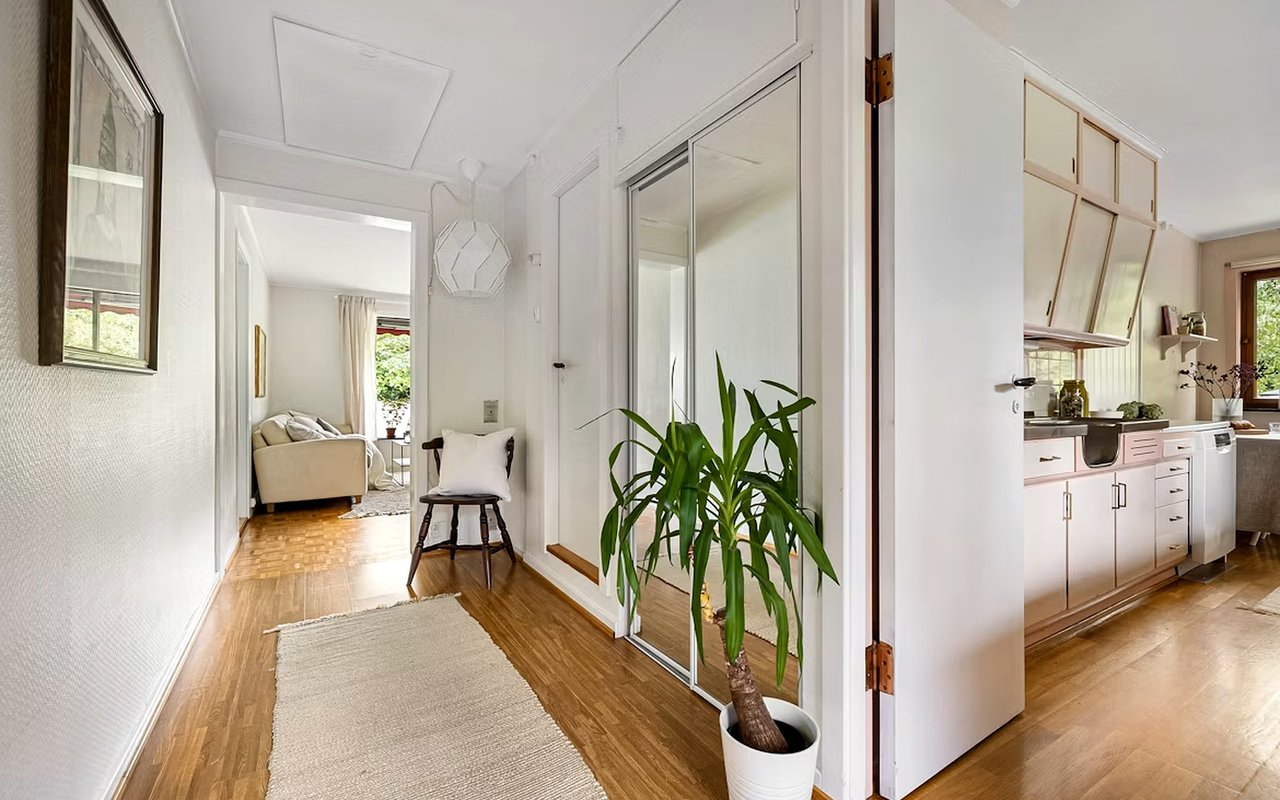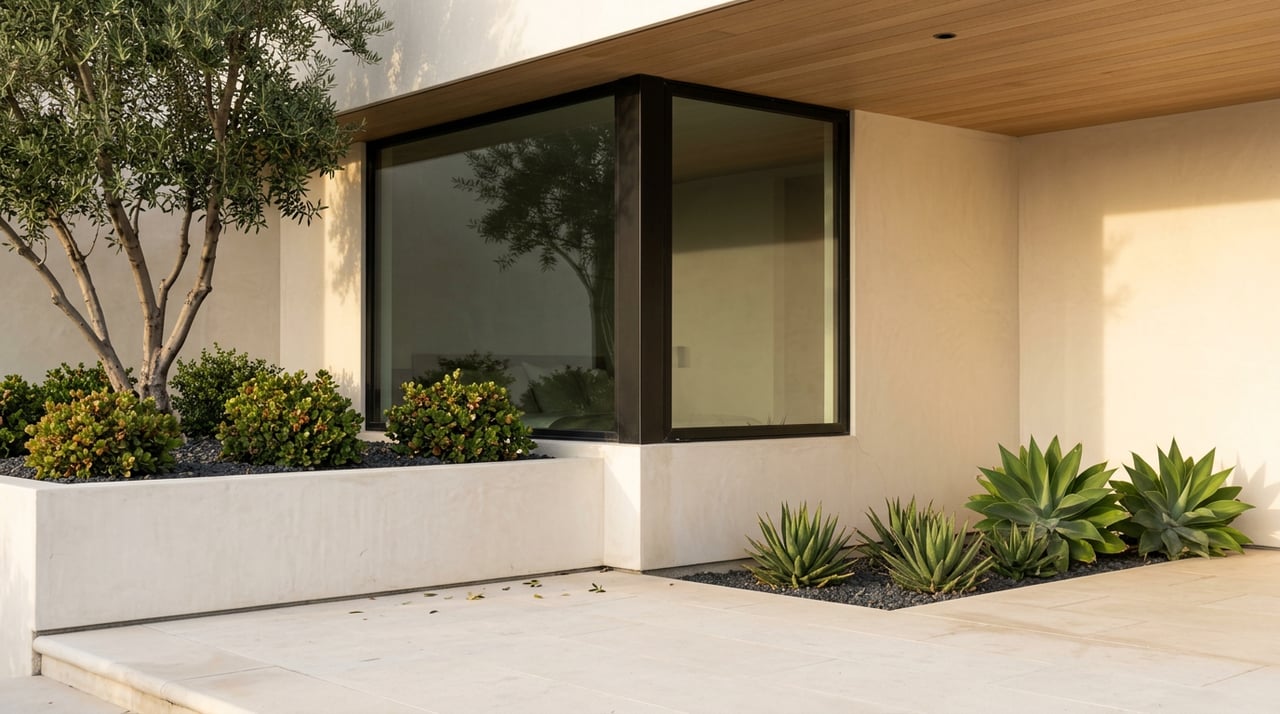
Two hillside houses, a quarter mile apart, same jetliner view of the basin, same 1960s bones under a recent renovation. One sits on Oriole Drive. The other sits over the ridge in Trousdale Estates. At a recorded price of eight million dollars, the Oriole seller writes a check at closing for roughly $365,000 in transfer taxes. The Trousdale seller writes one for about $8,800.
Nothing about the houses explains that gap. A municipal boundary does.
For three years, the standard advice for owners on the LA side of that line included a quiet asterisk: hold on, this may not last. As of late June, the asterisk is gone. That is the single most useful thing a Bird Streets owner can know this fall, and it reframes the decision from when does this go away to how do I price around something permanent.
The line that runs under the hill
The Bird Streets sit in the 90069 ZIP code, inside the City of Los Angeles. The neighborhood borders Trousdale Estates in Beverly Hills to the west, Sunset Plaza and the rest of the Hollywood Hills to the north and east, and the Sunset Strip and West Hollywood below. Three of those neighbors are separately incorporated cities, and Measure ULA does not reach any of them. West Hollywood states plainly on its own finance page that it imposes no additional city transfer tax beyond the $1.10 per $1,000 county rate. Beverly Hills levies no city-level transfer tax either.
This is where the first piece of real transaction friction shows up, and it catches sophisticated people off guard. The 90069 ZIP spans more than one taxing jurisdiction, and listing feeds in this pocket are inconsistent about which city they print next to an address. Mailing city is not taxing city. In Los Angeles County, the responsibility for computing documentary transfer tax falls on the document preparer, which in practice means your escrow or title officer, not the county recorder. Nobody at the counter is going to catch an error for you.
So before a net sheet means anything, the parcel itself has to be confirmed against city boundaries. On the Bird Streets that answer is almost always the City of Los Angeles. On a handful of parcels near the bottom of Doheny, it is worth having in writing.
What actually changed in June, and what did not
Here is the sequence, because most of what is written about the mansion tax online is now describing a future that did not happen.
A Howard Jarvis Taxpayers Association initiative, branded the Local Taxpayer Protection Act, would have capped municipal transfer taxes statewide at a small fraction of ULA's rates. It qualified for the November 3, 2026 ballot in the spring. Then, in late June, its sponsors pulled it as part of a deal in Sacramento. LAist reported that the substitute measure headed to voters instead raises the approval threshold for future citizen-initiated special taxes and leaves existing transfer taxes untouched. Assembly Bill 736, which would have capped rates legislatively, was left in limbo by the same deal.
The local track closed too. On July 6, the City Council declined to send a multifamily exemption to voters and instead directed staff to draft a narrower tax credit pilot, which has not been finalized. The courts have been no kinder to repeal: a December 2025 Court of Appeal ruling rejected the constitutional challenge, and the 2024 local repeal attempt failed at the polls.
Meanwhile the thresholds reset on schedule. For any transaction closing after June 30, 2026, the City of Los Angeles Office of Finance puts the tiers at $5,400,000 and $10,900,000, up from $5,300,000 and $10,600,000 the prior year. The rates did not move: 4 percent on transactions above the lower threshold, 5.5 percent at or above the upper one, calculated on the gross recorded price rather than on gain, and layered on top of the city's 0.45 percent base transfer tax and the county's 0.11 percent. Thresholds index each July 1 to the Chained CPI, and if a closing straddles that date, the recording date controls.
The cliff, at current figures
| Recorded price | Measure ULA | Base transfer taxes at 0.56% | Total at recording |
|---|---|---|---|
| $5,400,000 | none | $30,240 | $30,240 |
| $5,450,000 | $218,000 | $30,520 | $248,520 |
| $8,000,000 | $320,000 | $44,800 | $364,800 |
| $10,900,000 | $599,500 | $61,040 | $660,540 |
Read the first two rows together. Fifty thousand dollars of additional price costs the seller roughly $168,000 in net proceeds. That is the whole mechanism in one line: this is a cliff, not a bracket, and there is a narrow band just above each threshold where a higher sale price makes a seller poorer.
One detail worth confirming with escrow rather than assuming: the city's language assesses the 4 percent rate on transactions greater than $5,400,000 and the 5.5 percent rate on transactions at or above $10,900,000. The two thresholds do not treat the exact-dollar edge the same way. Published summaries disagree on this point. Your escrow officer's written calculation is the one that matters.
The number that contradicts the freeze story
The received wisdom is that ULA froze the high end. The transaction counts say something more specific and more useful.
Across Greater Los Angeles, single-family sales between $5 million and $10 million ran 1,647 in 2023, 1,882 in 2024 and 2,251 in 2025. Through June 17, 2026, there had been 1,092, slightly ahead of the 1,060 recorded at the same point in 2025. Above $10 million, full-year sales went 518, then 537, then 647, with 329 closed by mid-June 2026 against roughly 95 to 130 at the same point in each year from 2016 through 2020.
Set that against the academic work. Research summarized by California YIMBY in April 2026 found monthly turnover for single-family properties down about 25 percent, with commercial down 78 percent, and estimated that 63 cents of every ULA dollar is offset by property tax reassessments the city never gets because the sale never happens. Separate UCLA Lewis Center work put the drop in the odds of a property trading above the threshold at as much as 55 percent.
Both are true, and the reconciliation is the point. The tax does not stop compelling properties from clearing. It suppresses the marginal seller, the owner who would have traded for lifestyle reasons and can simply choose not to. What changed is not whether Bird Streets homes sell. It is who is willing to be the seller.
That has a direct consequence for anyone pricing here. Inventory in this neighborhood is now sorted by motivation rather than by breadth, which means the comparable set is thinner and more idiosyncratic than the price range suggests. In 2026 the active range in and around the Bird Streets has run from under $3 million on North Doheny to a $79 million listing on Blue Jay Way, with a Paul McClean house at 9016 Thrasher brought to market in February asking $82 million. In late August, a rebuilt Rising Glen estate with Madonna, Britney Spears and Brittany Murphy in its ownership history took a one million dollar reduction to $12.9 million. Three data points, three different markets.
Where the cliff actually lands on this hillside
Elevation is the pricing variable here. The higher and more unobstructed the view, the steeper the premium, which is why the neighborhood splits so cleanly around the threshold.
Unrenovated mid-century originals and lots without a clean view line trade well below it. Anything finished, gated and oriented toward the basin clears it by a wide margin and lands in a band where a $200,000 to $600,000 line item is a known cost of doing business rather than a deal-breaker. The genuinely awkward zone is a property that pencils somewhere between $5 million and $5.7 million, which on these streets often means a post-and-beam or a Smith and Williams-era house with good bones and deferred updates.
That is exactly where the renovate-or-sell question turns. The Real Deal reported in July that three years in, the tax remains central to how LA owners think about timing, pricing and whether to renovate at all. Oren Levy of the luxury homebuilder Gesh Group described owner hesitancy to sell as having reshaped his remodeling business. The trap for a Bird Streets owner in that band is spending $400,000 on a kitchen and terrace that lifts the achievable price from $5.3 million to $5.6 million, which pushes the sale over the cliff and returns less than doing nothing at all. Improvements that move a house from $5.2 million to $6.4 million are a different calculation entirely. The question is not whether to improve. It is whether the improvement clears the cliff or merely trips it.
Before you set a list price
- Confirm the taxing jurisdiction for the parcel in writing from escrow or title, not from the city name printed on a listing.
- Model net proceeds at three prices: just under the threshold, just over, and comfortably above. The middle one is frequently the worst outcome.
- Check your target closing date against July 1. The recording date governs which year's thresholds apply.
- Do not assume an exchange helps. ULA is a transfer tax collected at recording, not a capital gains tax, so a 1031 does not defer it.
- Treat the tax as a negotiable economic cost rather than a fixed one. Who bears it is a deal-by-deal conversation that depends on how scarce your particular view is.
Questions Bird Streets owners actually ask
If I sell privately, does the tax still apply? Yes. An off-market sale changes who sees the property and how much control you keep over timing and terms. It does not change what is owed once the recorded price crosses a threshold.
My neighbor's house is in West Hollywood. Are we really taxed differently? If the parcel is inside a separately incorporated city, yes. West Hollywood and Beverly Hills both sit outside the City of Los Angeles and outside ULA's reach. That is a boundary question about your specific parcel, and it is settled by the county record rather than by the ZIP code you share.
Could the thresholds move again before I close? They index every July 1. The rates themselves have not changed since April 2023. Anything scheduled to record near that date deserves a second look at the calendar.
The owners doing well in this market right now are not the ones who found a clever way around the tax. They are the ones who stopped treating it as temporary, built it into the pricing decision early, and made sure the property was genuinely worth crossing the line for. If you own on these streets and are thinking about the next two years, Homes by Marlyse will model the full closing math against your specific parcel and give you a straight read on where your house sits relative to the cliff, confidentially and well before anything goes to market. Let's connect.
This article is general market information for Los Angeles homeowners and is not tax or legal advice. Confirm current thresholds, rates and your parcel's jurisdiction with your escrow company and your own tax and legal advisors before making decisions.