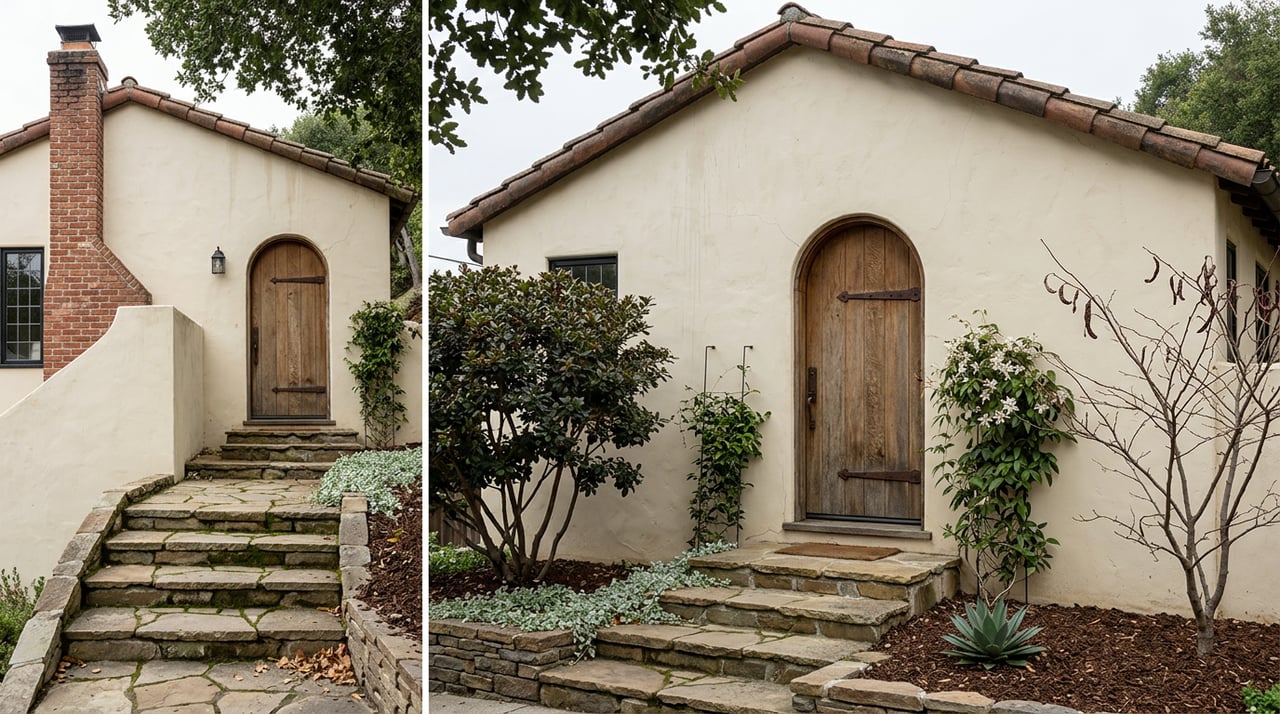
Walk into Beachwood Cafe on a Saturday morning and the room feels like it has looked this way forever. Worn booths, the same slice of Beachwood Drive visible through the window, a market next door that could pass for a movie set from the neighborhood's Hollywoodland days. Order a coffee and it's easy to assume you're sitting inside a fixed point, one of the few corners of Los Angeles that time simply skipped.
Almost none of what's actually happening in that room existed a decade ago. The diner that used to occupy this exact space closed. A new owner, Patti Peck, took over the building and rebuilt the identity from the studs out, working with architect Barbara Bestor to redesign the space while keeping the same four walls. That's the pattern worth understanding if you live here: the canyon's built form barely moves, but almost everything inside it keeps changing hands.
The Footprint That Won't Grow
Beachwood Canyon's commercial center is, functionally, one street. Wikipedia's own entry on the neighborhood puts it plainly: the canyon has its own market, cafe, private mailbox rental, florist and stables, full stop. There isn't a second commercial block waiting to be discovered. What you see on Beachwood Drive between Franklin and the base of the canyon is what has been there, more or less, since the neighborhood was platted as Hollywoodland in the 1920s.
That's not an accident of geography so much as a planning decision. Development standards for the Hollywoodland tract are tightly controlled to preserve the character of the original storybook-style homes and the small commercial node that serves them, which is a big part of why a coffee shop closing doesn't turn into a coffee shop being demolished and replaced. The building stays. Only the business inside it turns over.
You can see the same footprint doing double duty just by looking at the cafe's posted hours. The same four walls run two completely different neighborhood rhythms depending on the day:
| Hours | What it's doing | |
|---|---|---|
| Monday–Thursday | 8:00 a.m.–4:00 p.m. | Neighborhood breakfast counter |
| Friday–Sunday | 8:00 a.m.–9:00 p.m. | Evening dinner destination |
Nobody added a second dining room to make that shift happen. The space simply gets asked to do more on the weekends, and it does.
The market next door tells a quieter version of the same story. It has operated continuously since the 1930s, long enough that most people who shop there for milk and eggs have no idea the building's redesign carries the fingerprints of a significant mid-century architect from the early 1950s. Nobody walking in for a six-pack of sparkling water is thinking about architectural pedigree. The building doesn't announce it. It just keeps functioning as the corner market it has always been, decade after decade, while the neighborhood around it changes.
The Newest Old Building
The most current version of this pattern is playing out a few blocks off Beachwood Drive, at the Monastery of the Angels. Earlier this year, the Beachwood Canyon Neighborhood Association's Planning and Land Use Management Committee took up the question of a new tenant for the property: Homeboy Industries. According to the association's own notice, the plans call for no architectural changes to the building at all, with the intention to restore the original windows rather than replace them.
That single detail is the whole neighborhood in miniature. A building's use is shifting entirely, from religious order to nonprofit organization, and the physical shell isn't just staying put, it's being pulled back toward its original condition. In Beachwood Canyon, change tends to move inward. The windows get more original, not less, even as what happens behind them is transformed.
The One Thing That Doesn't Turn Over Easily
There's an exception to all this, and it's the one piece of neighborhood infrastructure that isn't a landlord-tenant relationship the community can quietly renegotiate every few years: the trail to the Hollywood Sign.
Beachwood Drive dead-ends at the gates of Sunset Ranch stables, and for a long stretch that's where a popular pedestrian route to the sign began. The gate there has had a bumpier history than the cafe or the market. It was closed for roughly ten months during a construction project spanning 2014 into 2015, then reopened to hikers. It didn't stay open long. In April 2017, following a legal dispute that came down in favor of the stables' business operations, the gate closed again, and it has remained that way since, with hikers rerouted to an alternate trailhead off Canyon Drive in Bronson Canyon, roughly a quarter mile to the east.
Run the math on that timeline and something interesting shows up. The gate was open for about two years. As of this year, it's been closed for closer to nine. The closure has now outlasted the reopening by more than four to one. That's the opposite of what happens with a coffee shop or a market building. Nobody can lease their way into fixing it, because the dispute isn't about who's renting the space, it's about a legal easement between a private business and a public trail. When the mechanism for change isn't a tenant turning over the keys, the outcome tends to lock in place rather than keep shifting.
The Beachwood Canyon Stairs loop has had an easier time of it by comparison. The 861-step route through the original Storybook cottage streets covers about two miles round trip with roughly 419 feet of elevation gain, and it takes most people an hour to ninety minutes to complete. Unlike the trailhead dispute, the stairs sit entirely on public streets, so there's no landlord and no easement fight standing between a resident and a Saturday workout.
A Saturday in the Canyon, Once You Know What You're Looking At
- Coffee or brunch at Beachwood Cafe, timed around whichever set of hours applies that day
- The 861-step stairs loop through the Hollywoodland streets, best done before the afternoon sun settles into the canyon
- A stop at the market on the way back down, whether or not you're thinking about who redesigned it
- If you're driving up toward the stables, remembering that the direct trail gate has stayed shut for years and Canyon Drive is the way in now
- Weekday street parking near the village is unrestricted, while weekend parking shifts to the stretch of Beachwood Drive south of the cafe, per the cafe's own posted guidance
None of this requires the canyon to add a single new building. It never has, and the planning framework that governs the Hollywoodland tract isn't going to let it start now. What keeps the neighborhood from feeling frozen is everything happening underneath that constraint: who's behind the counter, who holds the lease, who's about to move into a building that hasn't changed its windows since the order that built it. Pay attention to that layer, not the one that stays the same, and Beachwood Canyon starts to look a lot less like a place time forgot and a lot more like a place that simply channels its changes somewhere you have to know to look.
If you're curious how any of this shows up in what a Beachwood Canyon or Hollywood Hills property is actually worth, or what a fixed footprint like this means for renovation and resale down the line, Homes by Marlyse is always happy to talk it through. Let's Connect.
This article is general information, not legal, tax or financial advice. Consult a qualified professional about your situation.