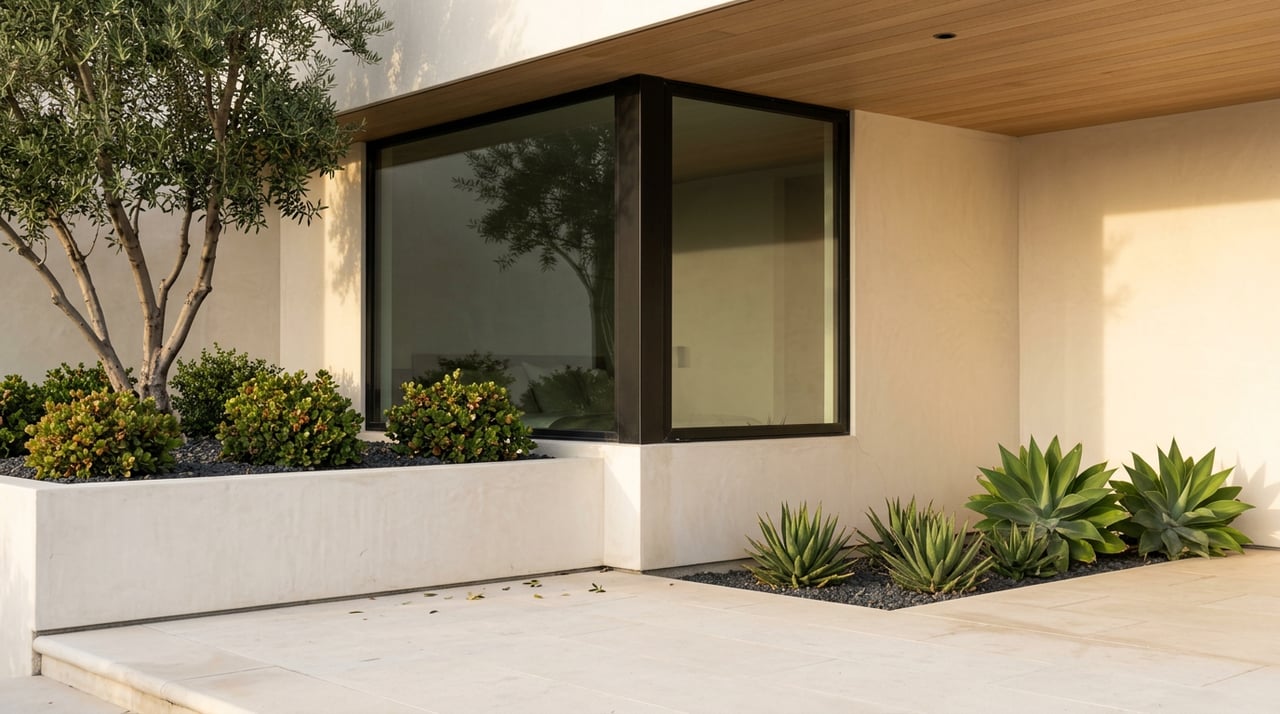
A comparative market analysis landed on my desk this month for a client cross-shopping two Sherman Oaks streets a few blocks apart. One home sat on a flat, tree-lined block north of Ventura Boulevard. The other sat on a hillside street to the south. Same city, same school district boundary lines nearby, same September closing window. The pricing behavior underneath them could not have looked more different. One comp was behaving like the rest of the San Fernando Valley this year. The other simply wasn't.
That split is the story worth understanding if you're shopping Sherman Oaks right now, because the neighborhood-wide numbers making the rounds this fall are quietly blending two markets that move on different clocks.
The number that's actually falling
Sherman Oaks has cooled in 2026, and the timing is not subtle. Over the three months ending in August, the median sale price across the neighborhood ran $1.5 million, down 12.8 percent from the same stretch a year earlier. Homes have also been moving faster, closing in an average of 48 days compared with 65 days last year, which is an unusual pairing: prices down, speed up. That combination usually points to a market where sellers are pricing to today's comps instead of hoping for a repeat of an old peak, and buyers are rewarding the ones who do.
This is happening against a backdrop of mortgage rates that just climbed to their highest level in about a year. Freddie Mac's weekly survey put the 30-year fixed rate at 6.95 percent as of September 17, up from 6.76 percent the week before. A rate move like that changes what a buyer can qualify for within a matter of days, and it's a big part of why the blended Sherman Oaks number has softened the way it has.
If you stopped reading there, you'd assume the whole neighborhood is on sale. It isn't.
The hillside core isn't hearing it
Pull the data for the 91403 core, which carries most of the hillside streets south of the boulevard, and the picture flattens out. As of late June, the median list price there sat at $2,025,000, with the local Market Action Index reading a slight seller's advantage that hadn't budged in a month. A separate September snapshot for that same ZIP still showed a median list price near $1.75 million, well above the blended citywide figure and not tracking the same downward slope.
A median is a single number standing in for a lot of different houses. In Sherman Oaks it's standing in for a flat-lot ranch north of Ventura and a canyon-view estate south of it, and treating those as one market is how a buyer ends up misreading a listing entirely. The blended number is falling because the parts of the neighborhood most exposed to rate sensitivity, the flats, the condos, the product that's easiest to build and easiest to walk away from, are the parts doing the falling.
Why the line holds
The gap isn't about prestige. It's about what the ground will legally let you build.
North of Ventura, the terrain is flat. Standard lots from the original 1930s and 1940s subdivisions run around 6,750 square feet, and entry-level single-family pricing generally starts in the $1.1 million to $1.3 million range. What you see on the lot survey is close to what you can build.
South of Ventura, the land rises into the Santa Monica Mountains foothills, and roughly 80 percent of that side sits on ridgeline or canyon terrain. Entry pricing for hillside single-family homes starts closer to $2 million. Anyone planning an addition, a pool, or a major remodel on that side needs a slope-band and geotechnical review folded into due diligence, not discovered eighteen months later at the first design meeting, because the buildable envelope on a sloped lot can be a fraction of the total square footage on paper.
| North of Ventura | South of Ventura | |
|---|---|---|
| Terrain | Flat | Roughly 80% ridgeline or canyon |
| Typical lot origin | 1930s to 1940s subdivisions, ~6,750 sq ft | Varies sharply with slope |
| Entry-level single-family pricing (2026) | Roughly $1.1M to $1.3M | Roughly $2M and up |
| What limits construction | Standard zoning and setbacks | Slope-band analysis, drainage, retaining walls |
That's a supply story, not a demand story. When rates rise and buyer pools thin out, price has the most room to give where land is elastic, meaning more of it can be built on, subdivided, or converted. Where the hillside itself caps what a lot can hold, a rate shock has less to push against. The correction is landing where the land can absorb it.
The street that solved this before the ordinance existed
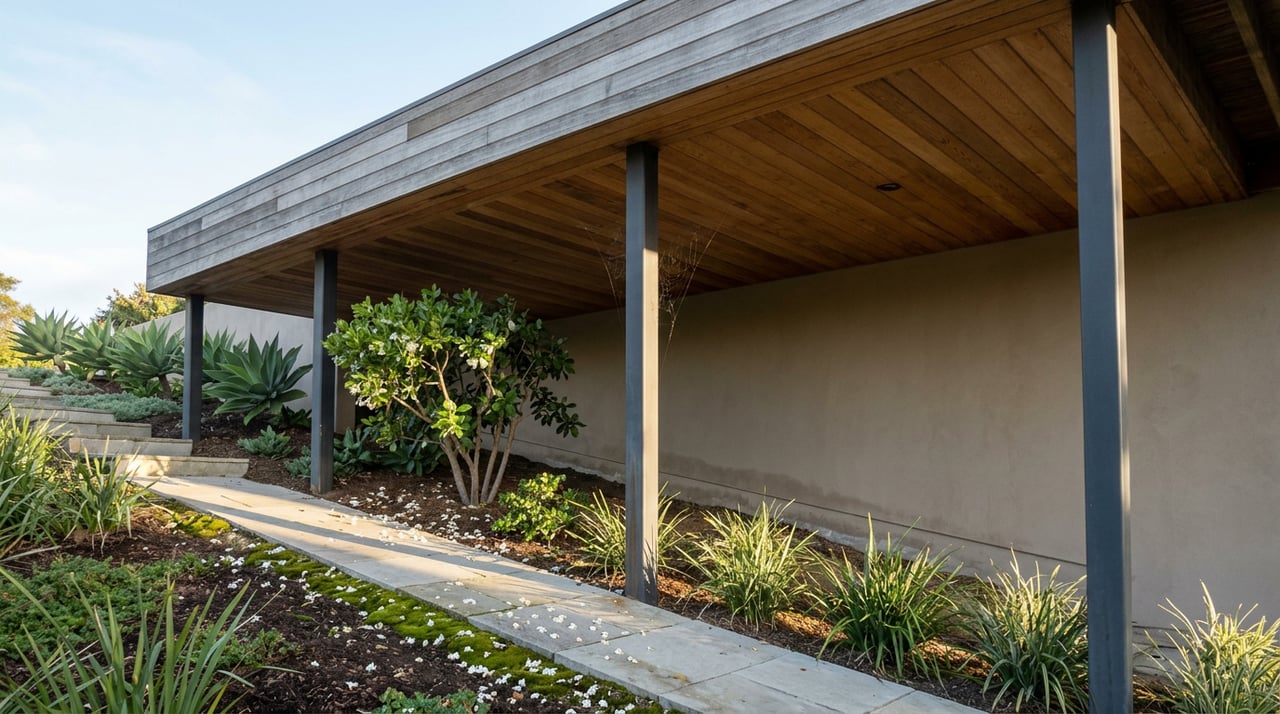
Long before hillside building rules were formalized the way they are today, one Sherman Oaks street handled the slope problem with engineering instead of grading. Oakfield Drive is home to seventeen houses known as the Platform Houses, originally designed by architect Richard Neutra for the Stone-Fisher development company, with architect William S. Beckett finishing the designs after Neutra withdrew from the project. Built between 1962 and 1966, the homes sit on massive cantilevered platforms that jut out over the slope above Beverly Glen Canyon, held up on tall metal posts instead of fill and retaining walls. Rather than cutting the hillside flat, the original architects traded dirt for steel and let the terrain stay exactly what it was.
It's a useful reminder for anyone shopping the south side today. The tension between what a hillside lot looks like and what it can actually support isn't a new bureaucratic hurdle. It's the defining fact of that terrain, and it has been solved in different ways for six decades.
The wrinkle worth watching
There's one development that could eventually narrow this gap, though probably not on the side most buyers expect. The East San Fernando Valley Light Rail Transit Project is currently under construction and projected to open in 2028, running through the Van Nuys Boulevard corridor. That corridor sits in the flats, not on the hillside streets south of Ventura. If the neighborhood sees anything like the transit-adjacency lift that Culver City and Pasadena experienced after their own rail lines opened, the earliest beneficiaries would be flat, buildable parcels near planned stations on the north side, not the already-constrained hillside core to the south. For a buyer weighing long-term appreciation between the two sides, that's a factor worth tracking rather than assuming it favors the pricier pocket by default.
How to actually shop it from here
- Anchor to the pocket, not the ZIP code. Ask which sub-market an address sits in before reacting to a list price.
- Use price per square foot as your reality check rather than a single blended median, since that median is combining products that behave nothing alike once you own one.
- Confirm the hillside designation for the exact parcel. Not every south-of-Ventura address falls under slope-based building limits, and that confirmation belongs in your due diligence period.
- Read days on market against the specific pocket, not the neighborhood average. A home sitting for 60 days in a market where correctly priced comps move in three weeks is telling you something about the launch price, not the location.
- If financing is part of your timeline, get quotes now rather than later. A rate that moved nearly 20 basis points in a single week this month changes the monthly math meaningfully on a loan this size.
A few questions worth asking before you write an offer
Is north of Ventura always the cheaper choice? Generally yes at the entry level, though the gap shifts by pocket. The northern edge also trades a meaningful share of condos and townhomes, which pull that side's own average down further.
Does a citywide correction mean the hillside side is due for a pullback too? Not necessarily on the same timeline. Price here is responding to what the land can support, not only to what buyers are willing to pay in a given month, and that kind of constraint doesn't loosen just because rates rise.
Should I wait for the light rail project before deciding which side to buy on? The project is still under construction with a 2028 target. If future transit access matters to your decision, that consideration points toward the flats north of Ventura rather than the hillside streets to the south.
Sherman Oaks rewards buyers who read it as several small markets stacked under one name, and the boulevard is the clearest dividing line among them. If you're weighing a specific block against what the headlines are saying about the neighborhood, that's worth a real conversation rather than a portal search. Homes by Marlyse works across Los Angeles' hyperlocal pockets every day, and we're glad to pull the comps for your exact street before you write anything. Let's connect.