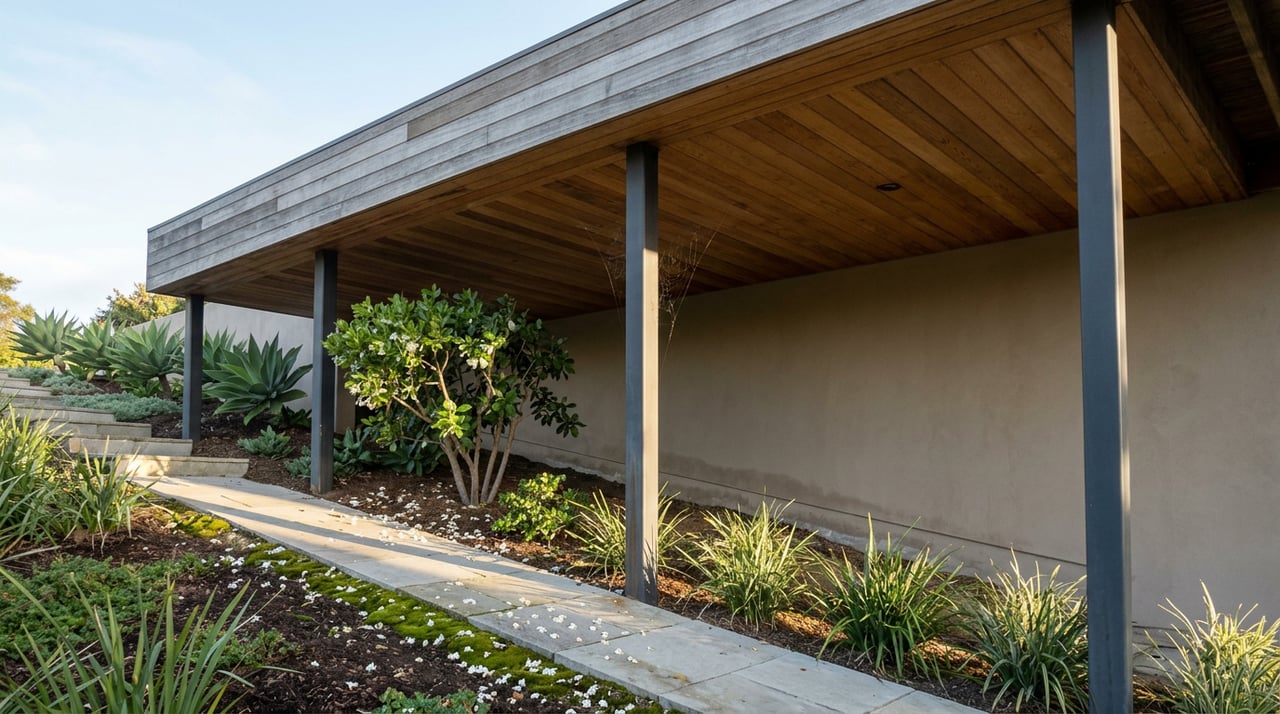
A Cahuenga Pass listing photographs like most Hollywood Hills view lots: a deck cantilevered above a street like Woodrow Wilson Drive, city lights stacked toward downtown, and somewhere just out of frame, a retaining wall doing the quiet work of holding the whole picture in place. That wall, more than the kitchen finishes or the primary suite, decides how long the escrow takes.
Cahuenga Pass runs along the western edge of the 101 Freeway, from Lankershim Boulevard south to Mulholland Drive, a narrow band of Hollywood Hills West terrain that has been residential since well before the freeway existed. As of a mid-August 2026 market snapshot, homes here were listing at a median price near $1.5 million with an average price of roughly $1,053 per square foot. A separate MLS-sourced snapshot from earlier in 2026 put the average finished home at about 1,539 square feet, well under the Los Angeles County average of 2,318. Buyers here are paying a steep per-square-foot premium for a house that is, on average, smaller than what the same money buys elsewhere in the county. That gap alone tells you the price is attached to the lot and the view, not the structure. What it doesn't tell you is why the same listings tend to sit on the market longer than turnkey flatland homes in a comparable price band, with 2026 snapshots showing average time on market running into the 80s and 90s in days rather than weeks. The reason isn't soft demand. It's the ground.
A Special Grading Area, not just a hillside
Los Angeles treats hillside construction differently from flatland construction across the entire city, but within the broader Hillside Area, the Bureau of Engineering has drawn tighter boundaries around a smaller number of neighborhoods where past slope failures or active landslide movement make even routine work riskier. Cahuenga Pass sits inside one of those tighter boundaries, alongside Pacific Palisades and portions of Bel Air. Inside a designation like this, grading of almost any kind, including landscaping work that would be unremarkable on a flat lot, can require a full geologic hazard report and a review by the City Geologist or a Bureau of Engineering-approved outside geotechnical engineer.
The city's own building code guidance confirms the mechanism behind this, even if it doesn't use the same shorthand: sites within the mapped Hillside Grading Area require combined soils and geology reports whenever the department determines that proposed grading is significant, and that determination is made against a specific Bureau of Engineering grid map, not against a general sense of whether a lot looks steep. A buyer touring a Cahuenga Pass home has no way to eyeball this. The listing photos show a finished deck and a manicured slope. What they don't show is whether the retaining structure under that slope was ever permitted, or whether the seller has a soils report on file that a lender's appraiser or a buyer's inspector will ask for before closing.
The retaining wall threshold that moves
On a flat residential lot in Los Angeles, a retaining wall under roughly four feet in height, measured from the bottom of the footing to the top of the wall, is often permit-exempt. That threshold doesn't hold in Cahuenga Pass.
| Wall height (footing to top) | Typical flat-lot rule | Cahuenga Pass hillside rule |
|---|---|---|
| Under 4 feet | Often permit-exempt | Permit and engineering can still apply |
| 4 to 5 feet | Permit required; soils report often triggered | Soils report threshold frequently drops below 4 feet |
| Over 5 feet | Full engineered plans required | Same, plus possible geologic hazard review |
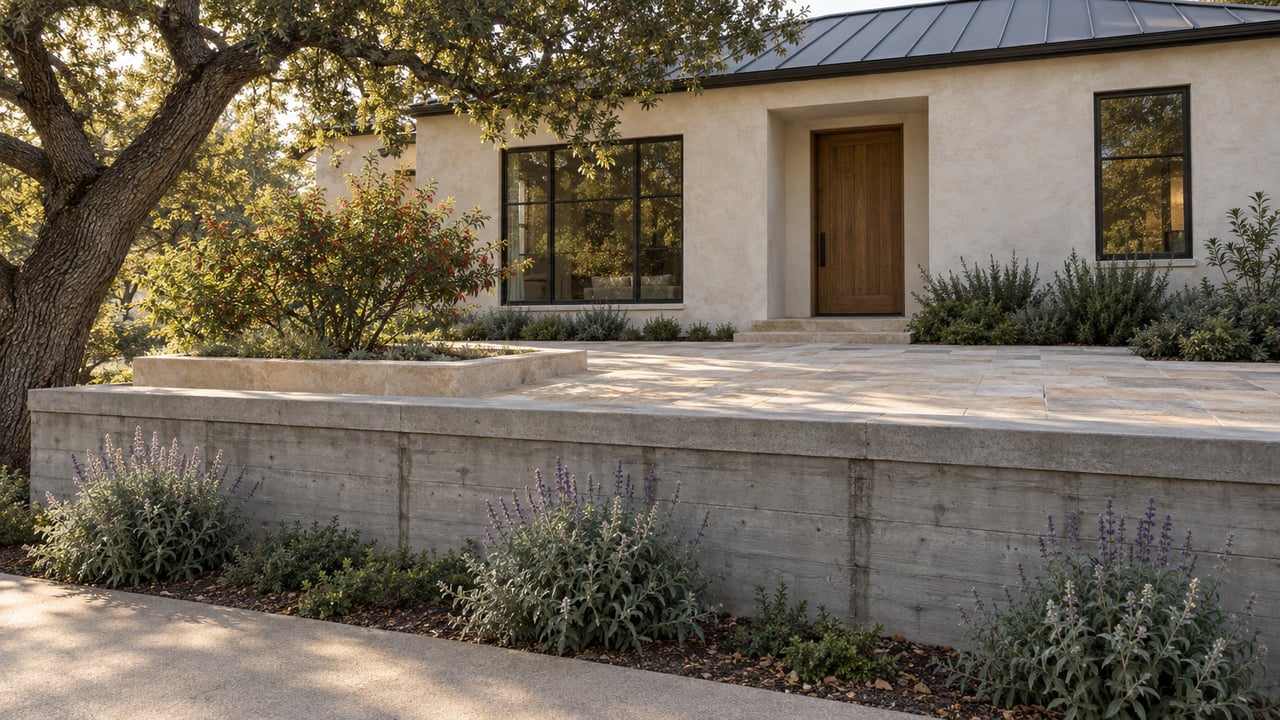
In the Hillside Area, retaining walls of any height require a permit and engineering under the municipal code section that governs hillside grading, a rule that doesn't bend the way the flat-lot exemption does. Walls over four feet in exposed height need a separate retaining wall permit with drawings from a licensed structural or civil engineer. And because the footing has to be embedded into stable soil below grade, a wall that reads as three feet of visible masonry can measure five feet from the bottom of the footing, which is enough to trigger the requirement without anyone standing on the sidewalk realizing it.
There's a second rule that catches buyers later, after closing, when they're planning a pool or an addition. LADBS generally restricts placing a new footing or structure within a horizontal distance equal to the retaining wall's height from that wall, unless the ground in between is level. On a lot where the buildable pad is already narrow, that setback can eat into space a buyer assumed was usable.
Why the days-on-market number reads the way it does
None of this shows up as a line item in a listing description. It shows up in the timeline. Standard hillside residential plan check in Los Angeles runs 6 to 14 months as of 2026, and even an expedited review track runs 3 to 6 months, largely because the mandatory geology review inside the Grading Division adds another 4 to 12 weeks on top of standard plan check, running on a separate track from the rest of the permit. None of that is unique to a buyer trying to build something new. It's the same review process a buyer's own due diligence period runs into if a retaining wall on the property was never permitted, or if a soils report referenced in an old disclosure is more than a few years old and an appraiser wants something current.
That's the more honest read of Cahuenga Pass's longer average time on market. A flatland Los Angeles listing in the same price range can often move through inspection, appraisal, and loan underwriting without a geotechnical question ever coming up. A Cahuenga Pass listing frequently can't, because the retaining structure holding up the driveway or the pool deck is exactly the kind of hillside feature that pulls a soils report into the conversation, and once that conversation starts, it runs on the city's timeline, not the buyer's or seller's.
What a seller can get ahead of
The due diligence isn't optional, but the timing of it is negotiable, and that's where sellers have real leverage. A geology report prepared and cleared before a property goes on the market, rather than commissioned mid-escrow after a buyer's inspector flags a wall, removes the single biggest variable from a Cahuenga Pass transaction's timeline. It's common enough to see it treated as a selling point on its own: land listings in the Pass have marketed an "approved and updated Geology Report" alongside an already-built foundation and retaining walls as the reason a parcel is shovel-ready for a builder rather than a multi-month unknown. The same logic applies to a finished home. A current soils report, a documented permit history on any retaining structure over four feet, and a clear answer to whether the lot falls inside the Special Grading Area boundary turn what would otherwise be an open question during escrow into paperwork a buyer's lender can simply file.
A few questions worth asking before you write an offer
Does every home in Cahuenga Pass require a geology report to sell? No. The report requirement is tied to proposed grading, not to the sale itself. But if a buyer's lender, appraiser, or inspector has questions about an existing retaining wall or planned work, the same city review process applies, and a seller who already has documentation on hand shortens that process considerably.
What if I only want to repair a cracked wall, not build something new? Repairs that touch structural elements or the footing are treated the same as new construction for permitting purposes. A cosmetic patch on the visible face of a wall is different from work that affects the wall's structural integrity, and the distinction matters for whether a permit is required.
How much extra time should I plan for if I want to add onto a Cahuenga Pass home after buying it? Budget for the standard hillside plan check window, 6 to 14 months in 2026, plus the additional weeks a geology review can add if the property sits inside the Special Grading Area. Confirming that status before you write an offer, not after, is the difference between a plan and a surprise.
If you're weighing a Cahuenga Pass property, whether you're buying into that view or getting ready to list one, Homes by Marlyse can walk through what the paperwork on a specific lot actually says before you're standing in an inspection you didn't see coming. Let's Connect.